11/11/2026
This morning, our Senior School community came together for our annual service of remembrance. One question has run through this week: who do we remember? It was first asked on Monday, when members of our Head Girl team led an assembly in preparation for today. Their answer was a wide one. We remember soldiers, but also civilians, medical staff, engineers, journalists and aid workers, on every side of every conflict. They spoke about the Christmas truce of 1914, shared a poem by the German soldier-poet Gerrit Engelke that recognises the same loves and fears in the men in the opposite trench, and reminded us that war is not confined to history, with conflicts continuing today in Ukraine, Gaza, Yemen, Sudan and Myanmar. Remembering victims “as individuals, not agents of a state”, they told us, is what allows remembrance to unite rather than divide.
Opening today’s service, our Head, Ms Cathy Ellott, brought that question closer to home. Before it became ours, this building was Battersea Grammar School, and boys who were educated here went on to fight. It is why we have our own war memorial in school.
“Today we particularly remember the sacrifice of those young men who died at war, having spent their school days here, in the very same hall, classrooms and corridors where we spend our time today.”
Our Head Girl team then gave their own answers. They began with the story of Charlie Horne, who died last week aged 100. In 1944, aged only 18, he was a seaman clearing mines from a D-Day landing zone. He came home, fell in love and watched his family grow, and he never lost sight of the thousands of young men who did not have that chance.
“I will never forget the men who didn’t come home. All I ask is that, when we are no longer here to tell you ourselves, you don’t forget them either.”
They widened the picture to the millions who crossed oceans from the Indian subcontinent, Africa, the Caribbean and across the Commonwealth to fight alongside British forces, a sacrifice too often overlooked. “Remembrance Day belongs to every soul who stood against tyranny,” we heard. One student then made it personal, speaking about her grandfather, a Major in the British Army who was posted to India and deployed to Burma, where he trained and led a troop of Gurkha soldiers.
A year ago, Ms Ellott invited students to write a poem for Remembrance Day. Today we heard one of them, Who?, read by the student who wrote it. It moves from the empty chair and the folded photograph to the boys who once filled this building:
We hear their echoing footsteps,
We see their dancing shadows,
we do not know their names, their faces, their stories
Yet we remember them.
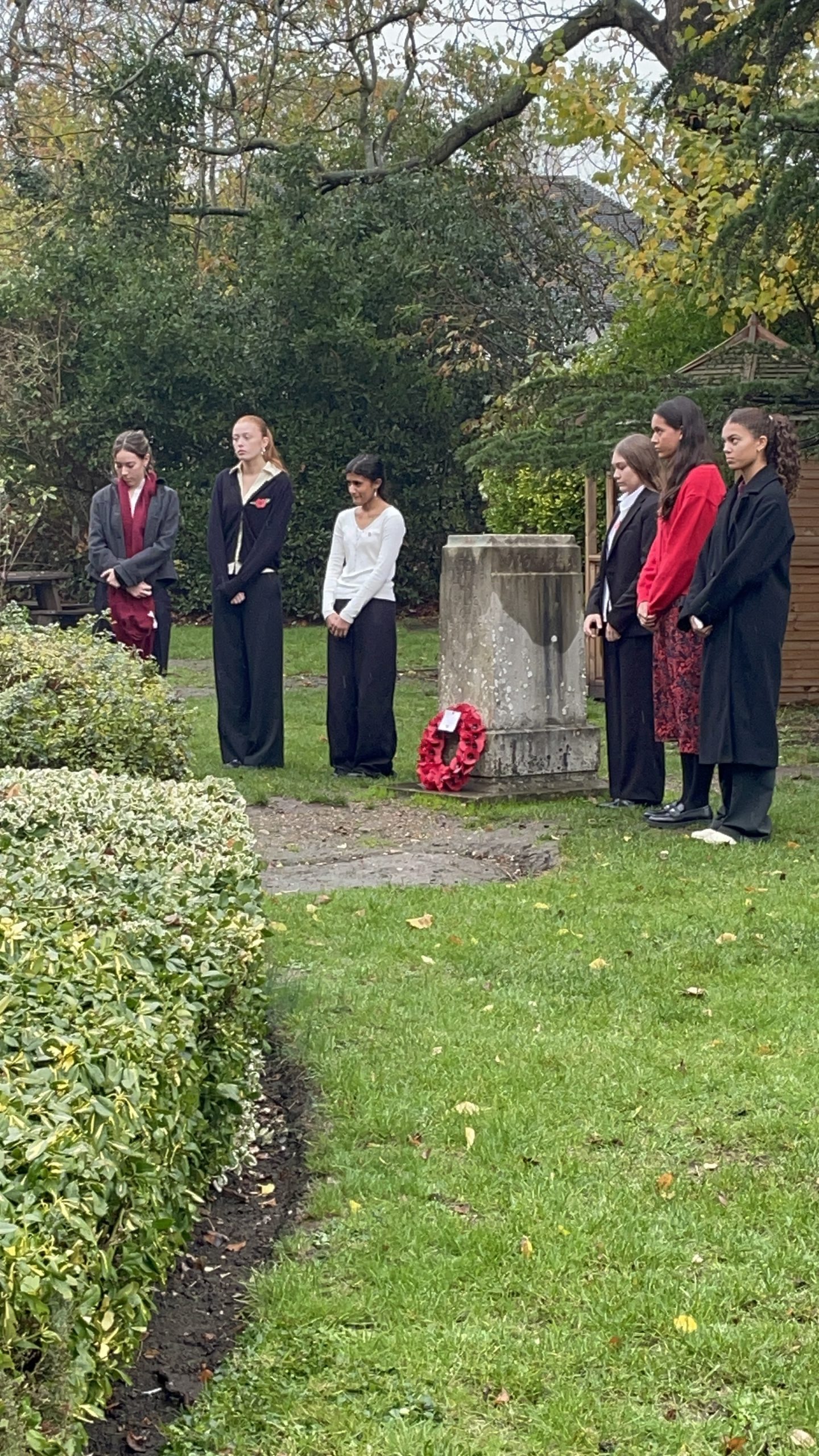
The Head Girl team then laid a wreath at the school’s war memorial, and our Head Girl read from Laurence Binyon’s For the Fallen, first published in The Times in 1914:
They shall grow not old, as we that are left grow old:
Age shall not weary them, nor the years condemn.
At the going down of the sun and in the morning
We will remember them.
The school stood in silence for two minutes, until the bugle sounded.
Ms Ellott’s closing words asked us to carry the morning into the rest of the day, and beyond it:
“As we think of the suffering and loss of war, let us renew our commitment to be kind; to listen with humility and thoughtfulness; and to act with integrity in all we do, knowing what is good and what is right.”
Who do we remember? This week our Head Girl team answered in their own words: a 100-year-old sailor, a grandfather in Burma, soldiers from across the world, and the boys who sat in these classrooms before us.
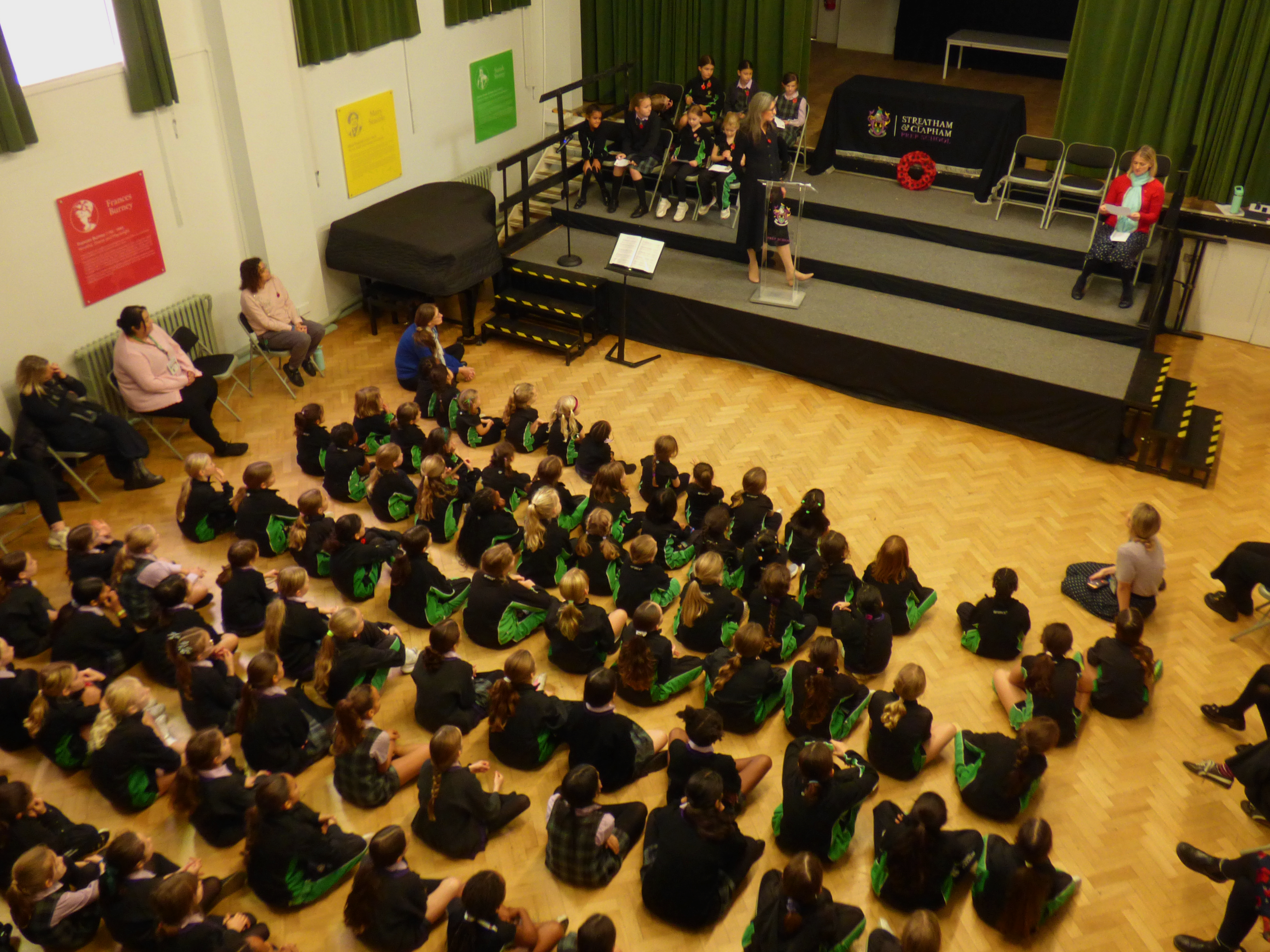
Our youngest pupils marked the day in their own way at the Prep School. Their assembly centred on a letter addressed to the “Children of the Future”, written in the voice of Elsie, a ten-year-old living through the war. Elsie describes the air-raid siren that sends her hurrying indoors, the blackout curtains that make home feel dark and different, rationing, and friends sent away to live with people they do not know. What she misses most are the little things: walking to school with her friends, playing in the playground, having everyone together.
Her letter ends with a request to the children reading it:
“Please look after one another. Be kind, help people who are struggling and never take peace for granted.”
The girls reflected on what that asks of them today. Remembrance is not only about looking back; it can also inspire us to make kind, thoughtful choices now. We cannot change the past, but we can learn from it, choosing kindness over unkindness, understanding over disagreement, and helping others over turning away. Every message the girls shared was part of a promise to remember the past and value peace in the present.
Latest News:
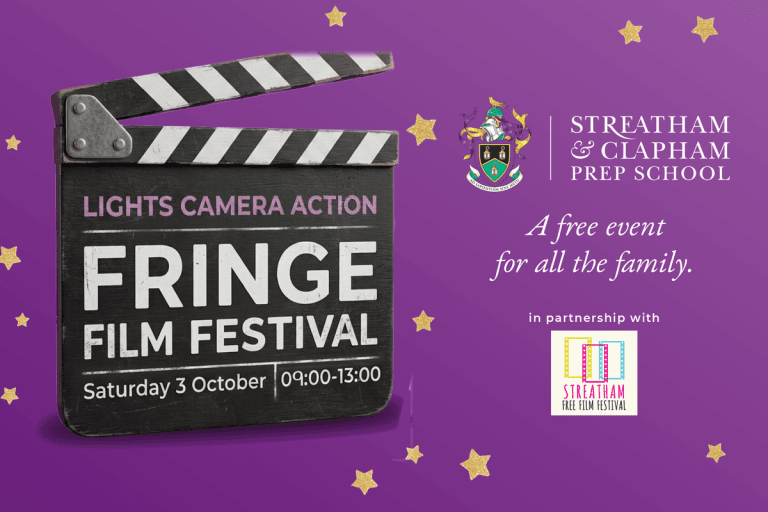
Our inaugural Fringe Film Festival opens its doors to the community
On Saturday 3 October, Streatham & Clapham Prep School invites families from across Streatham, Clapham and beyond to a free morning of film-making. It is also a first-hand look at how we teach.
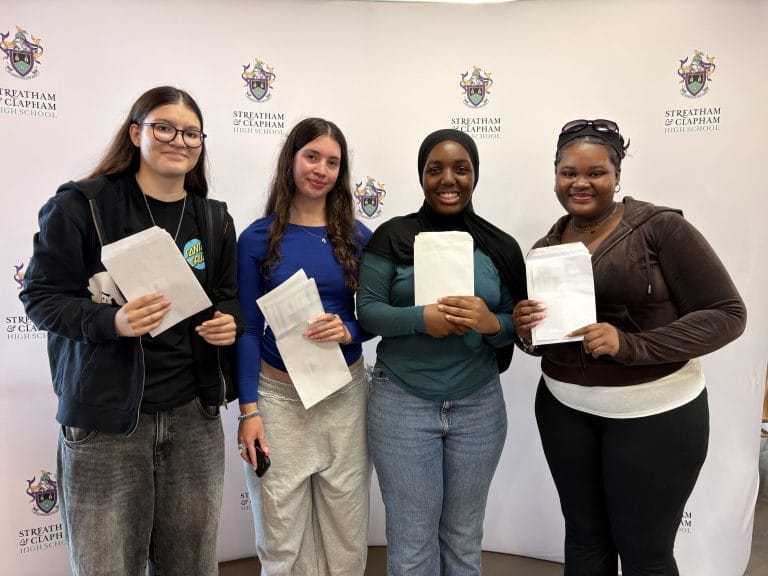
SCHS celebrates GCSE results
Streatham & Clapham High School is delighted to announce another outstanding set of GCSE results, with almost half of all grades awarded at 9–8 and nearly a quarter of the year group achieving an average of grade 8 or above.
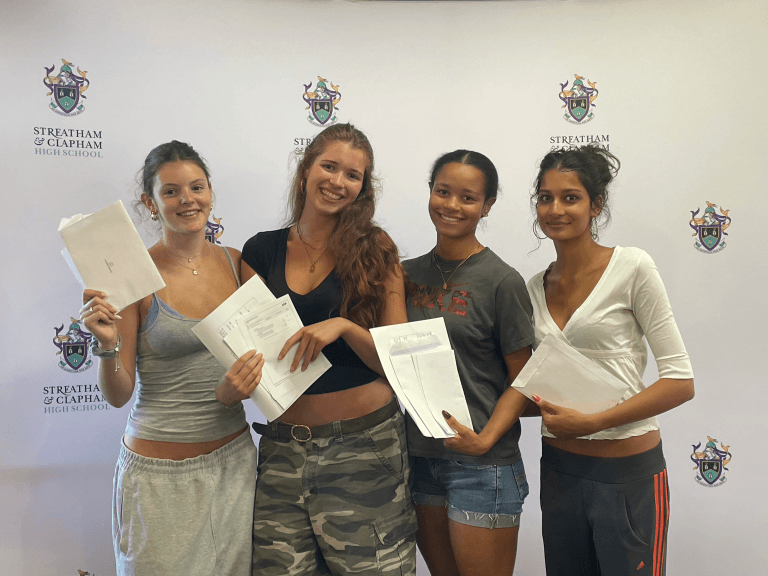
SCHS celebrates A Level results
Our Year 13 students have excelled themselves with the school’s best A Level results since 2017 (excluding the Covid years). A quarter of the girls gained all A*s and As with 42% of all grades at A* – A, up from 33% last year.

SCPS Commended in Independent School of the Year Awards
SCPS is proud to announce that it has been commended in the prestigious Independent School of the Year Awards for SEND Provision.